No ATS. No setup. $20 per hiring process.
200 CVs. 5 criteria. One shortlist.
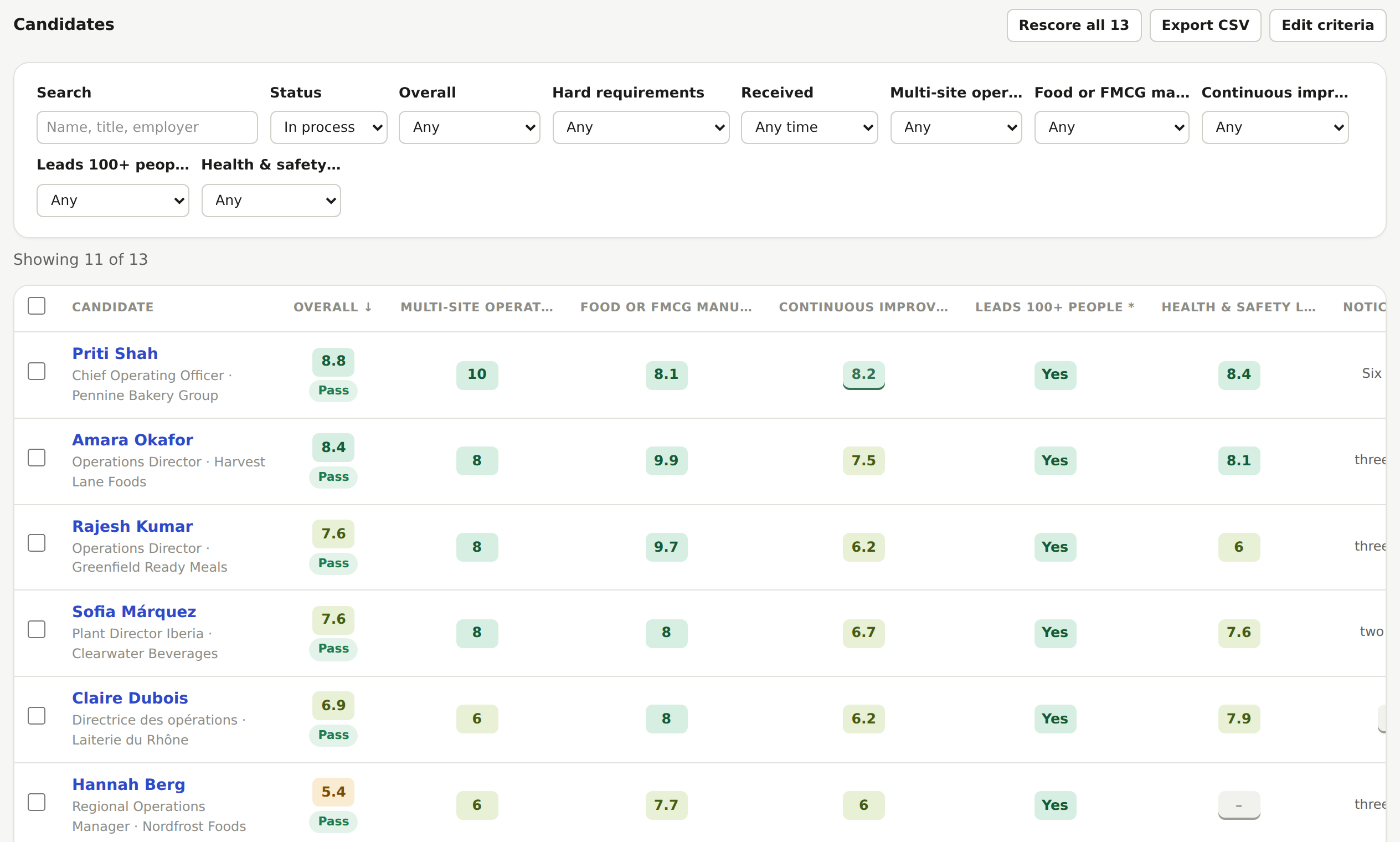
Candidates email their CV. You get a ranked shortlist with reasons, and you can reject people properly, with real reasons, in a couple of clicks.
The demo is a real search with 13 CVs already scored. No sign-up.
You're hiring, and you're about to drown in CVs.
Two hundred applications, a day job, and the nagging feeling that the best person is on page nine. Keyword filters miss people. A full applicant tracking system is weeks of setup for a role you fill once. So the CVs sit in an inbox, half-read, and most candidates never hear back.
PlainHire does the reading, the same way for every CV, and shows its working.
How it works
Say what matters
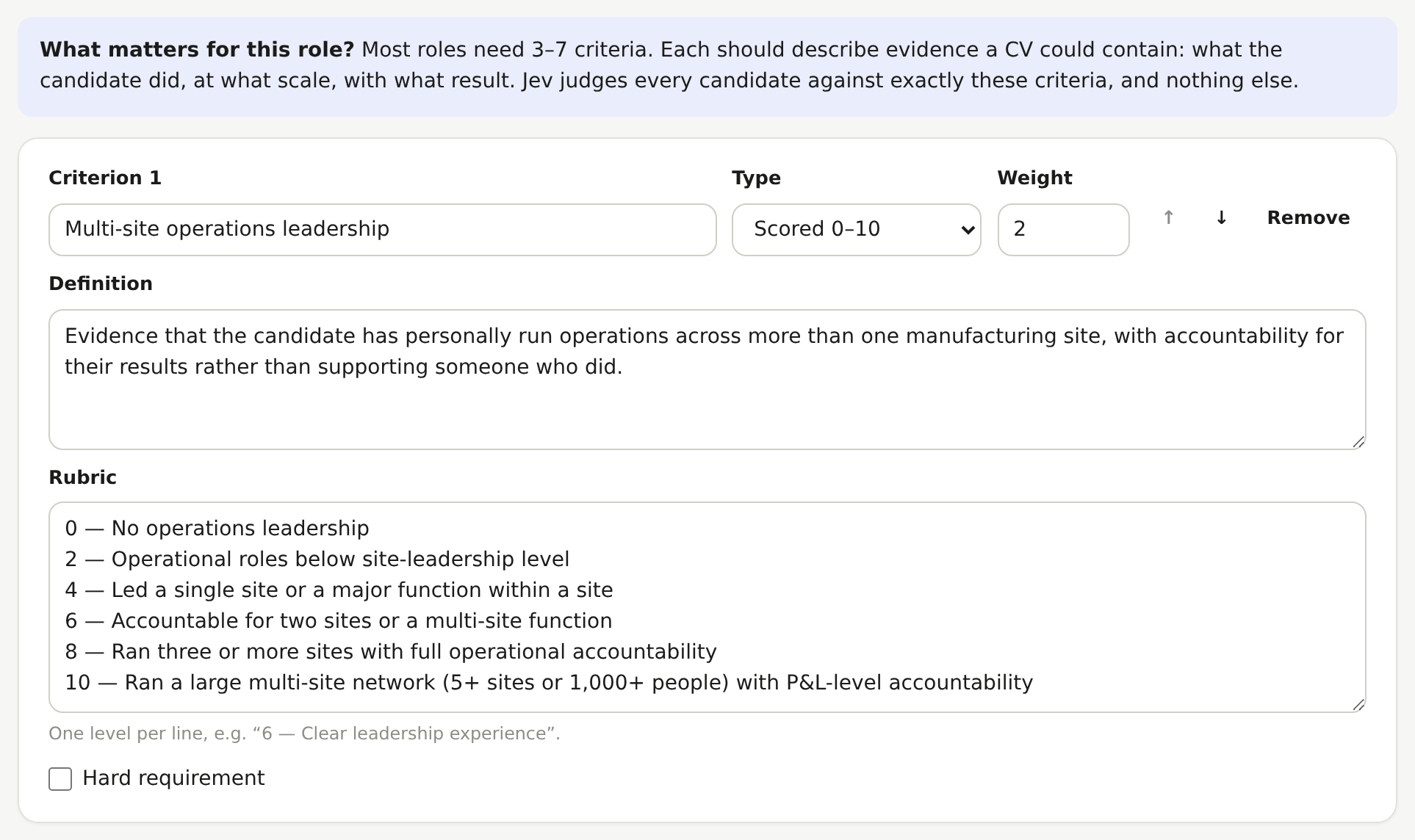
Paste the job description. We suggest 3–7 criteria, each with a clear scale. You edit them and approve them.
Send us the CVs
Every role gets its own email address, like sales-director.acme@plainhire.app. Put it in the ad, give it to agencies, or forward what lands in your inbox. PDFs, Word files and scans all work.
Get the shortlist
Every candidate is scored against your criteria within minutes, ranked, with the lines from their CV that back up each score.
Evidence, not vibes
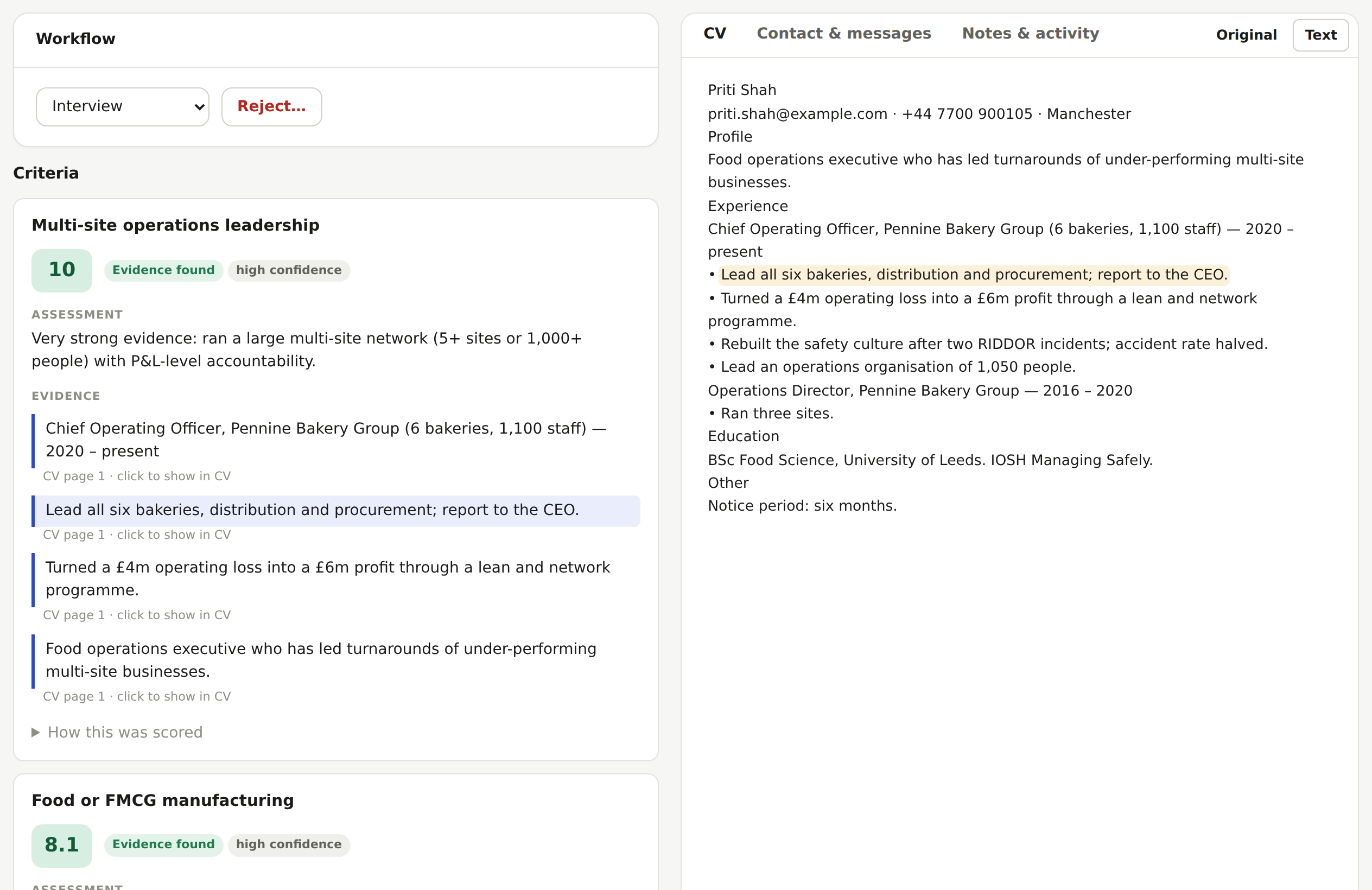
Every score shows its working.
Click any score to see why: the exact lines from the CV, the page they're on, and what's missing. The CV sits right beside the scores, so you can check anything in a second.
- “No evidence” is never confused with “doesn't meet it”
- Must-haves come back Yes, No or Unknown, never guessed
- Weak spots turn into interview questions
The part everyone skips
Reject people properly, with real reasons.
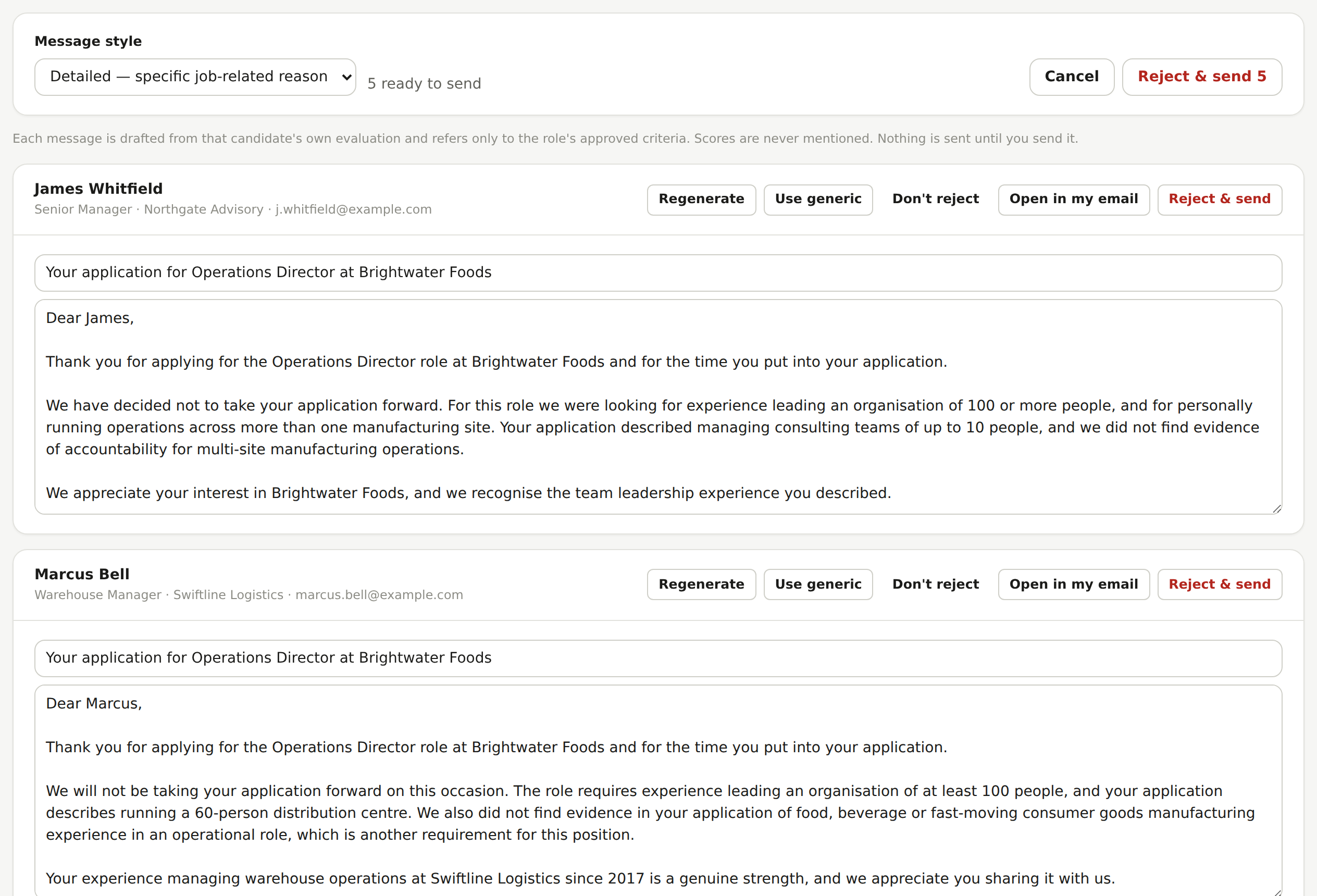
Select the people you're not taking forward. Each one gets their own short, polite message explaining the job-related gap, written from their own evaluation. You read it, tweak it if you like, and send.
- Fifty rejections, fifty individual reasons, one click
- Never mentions scores, never strays beyond the role's criteria
- A nudge when people have waited too long for an answer
Change your mind
Rethink the role, rescore everyone.
Halfway through, you realise hands-on delivery matters more than strategy. Edit a criterion, press rescore, and all 200 candidates are re-ranked in minutes. Earlier scores are kept, so you can see what changed.
Everything you need to finish the job. Nothing you don't.
You get
- A ranked, evidence-backed shortlist
- An email address for every role
- Shortlist, interview, offer and hire, in one list
- Individually reasoned rejection emails
- Notes, a full history, and a CSV export
- Your team, with the right access for each person
You don't need
- A subscription or seat licences
- An implementation project or training
- To change how CVs reach you
- To read 200 CVs to find 20
Pricing
$20 per hiring process
One role, open until you hire, with 500 CVs included. Most roles never get near that; if yours does, add another 500 for $20, and nothing that arrives in the meantime is lost. No subscription. Hire twice a year? That's $40 a year.
Prices in £ GBP · € EUR · $ USD. The same number in each, including VAT where it applies.
Questions
Is a computer deciding who gets the job?
No. PlainHire reads and ranks; you decide. Nobody is rejected or emailed until you choose to. Every score comes with the evidence behind it, so you can check it, and candidates are told a person makes every decision. See how we meet the EU AI Act and GDPR.
Won't a ranking miss unusual people?
Sometimes, which is why every role gets a wild card. It's one candidate outside the top of the ranking who brings something distinctive for the job, such as a measured result nobody else has or directly relevant experience from another sector. It comes with the lines from their CV and a question to settle at interview. One click adds them to the shortlist.
How does it avoid bias?
Every candidate is judged against the same written criteria, and nothing else. Criteria that target protected characteristics, such as age, gender or nationality (or proxies like "digital native"), are blocked. Details like date of birth and marital status are stripped out before anything is scored.
What does it actually score with?
Jev, a decision model built to make the same judgment consistently across thousands of documents. It returns probabilities rather than prose, which is why every score can point to the exact lines behind it.
What file types work?
PDF, Word (DOC and DOCX), ODT, RTF, text and web pages. Scanned CVs and photos are read with OCR, in English, French, German, Spanish, Dutch and Italian.
Who do candidate emails come from?
From the job's own address, under your company's name, so candidates' replies land back in the role. If you'd rather send from your own mailbox, open any message in your email app with one click and send it yourself.
What happens to candidates' data?
CVs are encrypted at rest and never shared. CVs, emails and notes are deleted 90 days after a hiring process closes, so nothing sits around indefinitely. You'll get a reminder first, with a one-click download if you want to keep a copy, and you can delete any candidate at any time.
Can my team use it?
Yes. Invite hiring managers, recruiters, reviewers and interviewers, each with the right level of access.